For decades, the private rented sector has operated with limited oversight. Tenants with legitimate grievances faced lengthy, expensive tribunal processes. Landlords operated without a central compliance system. Enforcement was patchy, inconsistent, and reactive.
The Renters' Rights Act 2026 changes that fundamentally. Two new accountability mechanisms will reshape how the sector operates: the Private Rented Sector Ombudsman and the National Property Portal.
These aren't bureaucratic add-ons. They represent a shift from a largely self-regulated market to a transparent, accountable system where standards are visible, disputes are resolvable, and non-compliance has real consequences.
The Private Rented Sector (PRS) Ombudsman is a compulsory, independent dispute resolution service for tenants. It provides a free, accessible route to challenge landlord behaviour without needing to go through the courts.
Think of it as the rental sector's equivalent of the Financial Ombudsman Service. Tenants can escalate unresolved complaints about property conditions, deposit disputes, harassment, discrimination, or breaches of their tenancy rights.
The Ombudsman can investigate, make binding decisions, and order compensation or remedial action. Crucially, landlords must be members of the scheme. Operating without membership will itself be grounds for enforcement action.

The Ombudsman scheme launches in late 2026 as part of The Renters' Rights Act 2026's second implementation phase. Full compulsory membership becomes enforceable by 2028.
During the transition period, landlords will need to register with the approved Ombudsman scheme. Letting agents already operating under existing redress schemes (like The Property Ombudsman or Property Redress Scheme) will see their obligations extended to cover landlord members.
The process is designed to be tenant-friendly but fair. Here's the general structure:
Step 1: The tenant raises a complaint directly with their landlord or letting agent. They must give the landlord a reasonable opportunity to resolve the issue internally: typically 8 weeks.
Step 2: If unresolved, the tenant can escalate to the Ombudsman. The complaint must be submitted within 12 months of the issue occurring.
Step 3: The Ombudsman investigates. Both parties provide evidence. The Ombudsman reviews the case against the law, the tenancy agreement, and codes of practice.
Step 4: The Ombudsman makes a binding decision. If the landlord is found at fault, remedies can include compensation payments, repair orders, or policy changes.
Decisions are enforceable through the courts if a landlord refuses to comply.
The Ombudsman's remit is broad. It includes:
The Ombudsman cannot overturn tribunal decisions or handle disputes that are already in legal proceedings. It's designed for resolution, not litigation.
If the Ombudsman is about resolving disputes, the National Property Portal: officially called the PRS Database: is about preventing them.
This is a central, publicly accessible register of every privately rented property in England. It will hold detailed compliance records, landlord information, and enforcement history.
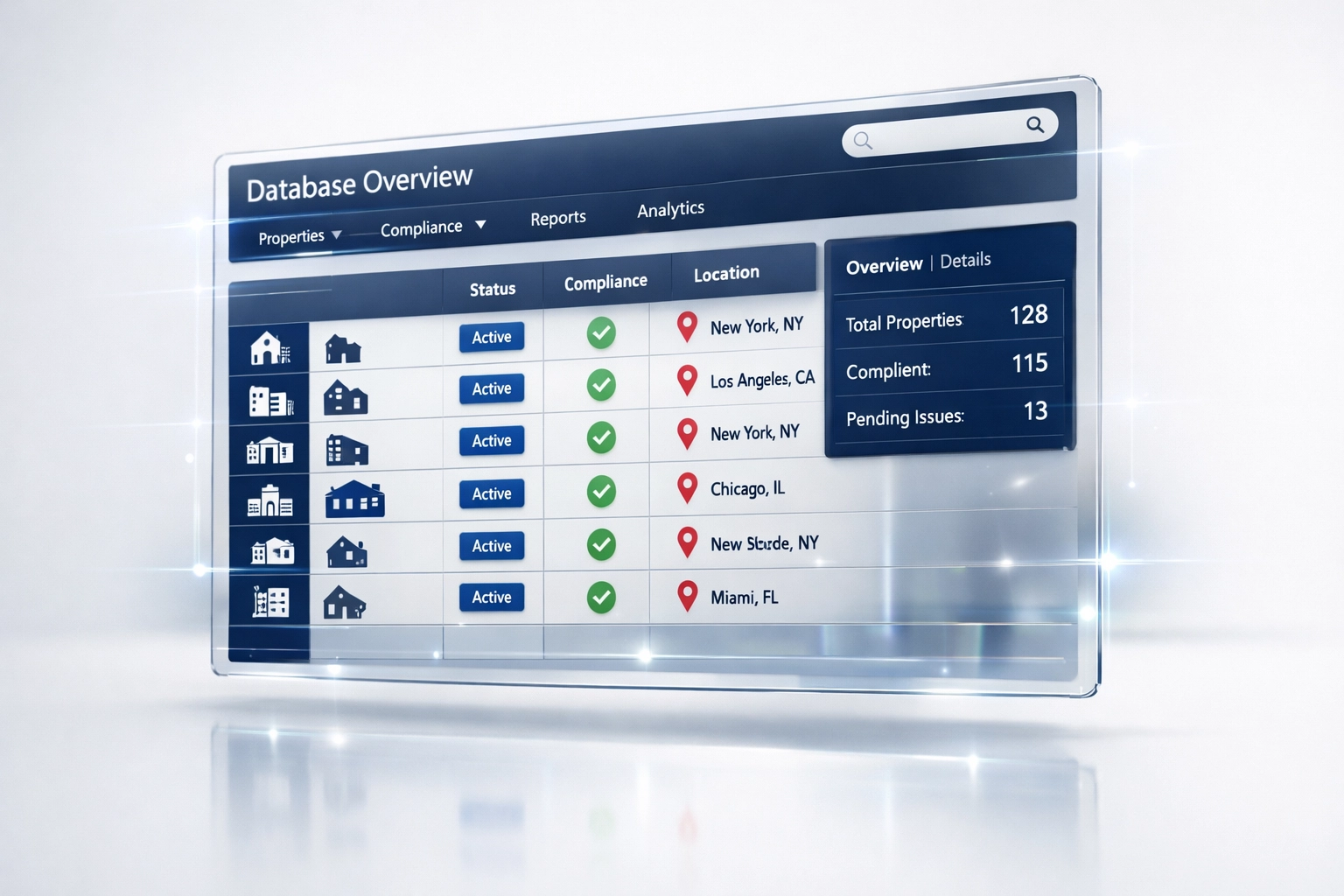
From late 2026, landlords must register:
This isn't a one-time registration. Records must be kept up to date. If a gas safety certificate expires, the landlord must upload the new one. If possession proceedings begin, the portal must reflect that.
Here's the enforcement hook: landlords cannot seek possession through the courts unless their property is registered on the portal.
Even if a tenant has caused significant damage, fallen months behind on rent, or engaged in anti-social behaviour, a landlord who hasn't registered cannot legally evict them. Registration isn't optional. It's foundational.
The portal addresses a fundamental problem: visibility. Local councils have struggled to enforce standards because they don't know which properties are rented, who owns them, or whether they're compliant.
Now, housing enforcement teams can search the portal by postcode, identify non-compliant landlords, and target inspections. Tenants can verify that their landlord is legitimate, properly insured, and meeting legal obligations.
It also creates a digital compliance trail. If a landlord repeatedly breaches standards, that history is visible to future tenants, councils, and tribunals.
Accountability without enforcement is meaningless. The Renters' Rights Act 2026 introduces a clear penalty structure for non-compliance with both the Ombudsman scheme and the portal.
Local councils can issue civil penalties for breaches:
These penalties are cumulative. A landlord with multiple properties in non-compliance could face substantial fines.
The Act reserves criminal prosecution for fraudulent behaviour. This includes:
Convictions carry unlimited fines and potential custodial sentences in extreme cases.

Local councils gain extended enforcement powers and, critically, can retain penalty revenue. This is designed to create a self-funding enforcement model.
Previously, penalty income went to central government. Now, councils can reinvest it in housing enforcement teams, proactive inspections, and tenant education programmes.
This should mean faster, more consistent enforcement across regions.
The Ombudsman and the portal aren't separate systems. They're designed to interlock.
When a tenant files an Ombudsman complaint, the Ombudsman can cross-check the portal. Is the landlord registered? Are safety certificates current? Has this landlord faced previous enforcement action?
When a council investigates a complaint, they can check whether the landlord has complied with Ombudsman decisions or ignored them.
When a landlord seeks possession, the court checks portal registration. If compliance is in question, the judge can review Ombudsman findings.
It creates a closed loop of accountability. Non-compliance in one area triggers scrutiny in others.
For tenants, these systems provide accessible routes to challenge poor practice without legal costs or tribunal stress. Complaints that once took months and thousands of pounds to resolve can now be handled through a free, structured process.
For landlords operating professionally, the systems provide clarity. The portal becomes a digital record of compliance: proof that you're meeting standards. Ombudsman membership demonstrates accountability. Done properly, these aren't burdens. They're credentials.
For councils, the tools finally match the task. Instead of reactive enforcement based on tenant complaints, they can proactively identify risk properties and target resources effectively.
The private rented sector is entering an era of transparency. The question isn't whether to comply: it's how quickly you adapt to the new baseline.


Let Tech Solutions Ltd is an Appointed Representative of George Stubbs Insurance Services Ltd, which is authorised and regulated by the Financial Conduct Authority.